
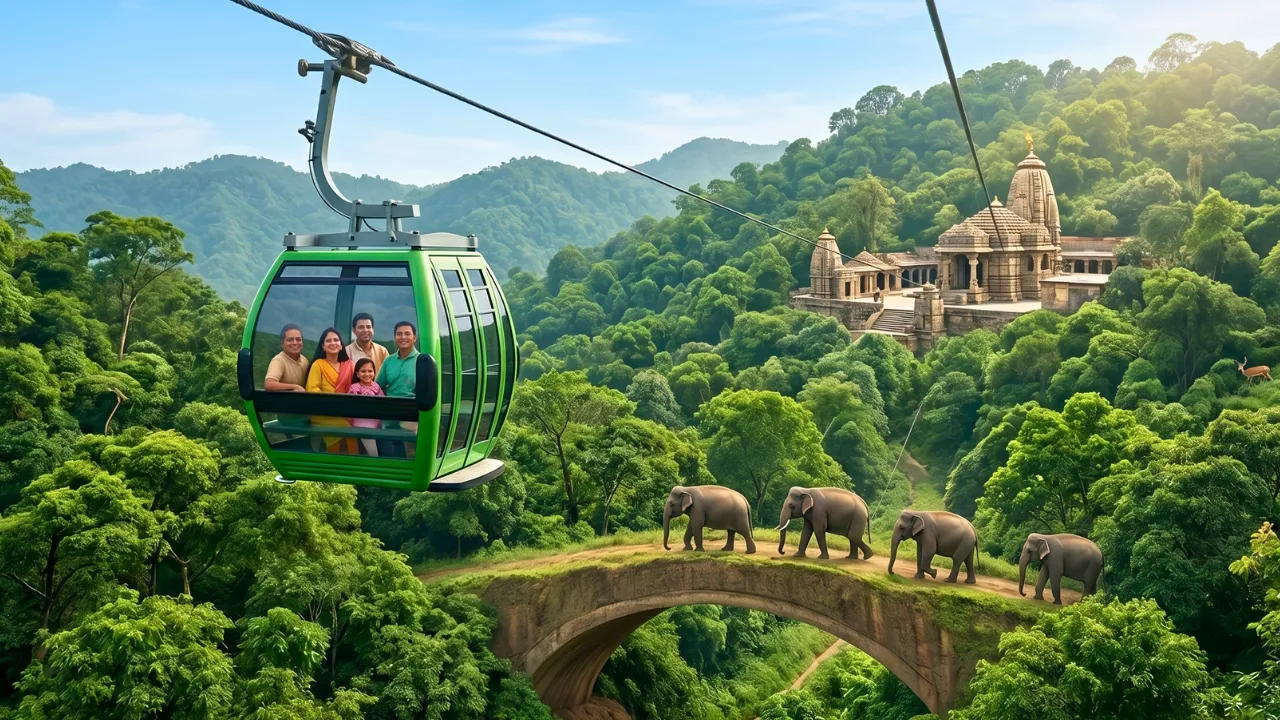
Dehradun News: The Uttarakhand government is aiming to develop the proposed ropeway project from Rishikesh to the Neelkanth Mahadev Temple, a model for both the convenience of devotees and environmental protection. This ambitious project, costing approximately ₹450 crore, will include developing a special green corridor for wildlife protection.
The National Board for Wildlife (NBWL) has clarified, in approving the project, that the ropeway construction should not disrupt the traditional wildlife routes. Under this condition, the government will develop a corridor similar to the Delhi-Dehradun Expressway, allowing elephants, leopards, deer, and other wildlife to navigate their natural paths safely.
The journey to Neelkanth Mahadev will take 15 minutes.
According to Housing Secretary R. Rajesh Kumar, after the construction of this approximately 6.5-kilometre-long ropeway, devotees will be able to reach the Neelkanth Mahadev Temple from Rishikesh in just 15 minutes. Currently, devotees must travel approximately 30 kilometres by road or trek approximately 9 kilometres on foot. The ropeway will not only make the journey easier but also significantly save time.
Ropeway to be built from Tapovan to Neelkanth Mahadev
The proposed ropeway will begin in the Tapovan area of Rishikesh, extend to Triveni Ghat, and then to the Neelkanth Mahadev Temple. The entire route will pass through the Rajaji Tiger Reserve and the dense forest areas surrounding the Ganges.
Important Area for Elephants and Other Wildlife
This area is considered crucial for the movement of Asian elephants. Additionally, large populations of leopards, sambar, chital, barking deer, wild boar, nilgai, ghoral, langur, and monkeys are found here. Tiger activity has also been recorded in some areas. Given this rich biodiversity, special care is being taken in the project design to maintain a balance between development and environmental conservation.
The project has gained momentum.
After receiving approval from the National Wildlife Board, the district administration has provided one hectare of land for the project. The forest land transfer process is also expected to be completed after receiving a report from the Wildlife Institute of India. The government believes that once implemented, this project will become the country’s first “green ropeway,” combining religious tourism, modern infrastructure, and wildlife conservation.